Thursday and today, Friday 20th, were two clear days where I could visit the Wildfowl and Wetlands Trust at Slimbridge. Yesterday saw heavy rain, but I did see some of the usual geese and ducks and through the rain I saw two Peregrines argue over a post. This is a regular feature as seen from the Holden Tower. It was not a good day for birding and the weather for today was very good.
The Holden Tower gave me close views of Cranes and by the end of the day the total for these birds was seventeen. The Geese grazed close by with Canada, Greylag, Barnacle and Pink Footed easily seen. The Red-breasted Goose had been seen again grazing with the Barnacles, but it was not in view until later. Late in the afternoon from the Zeiss Hide it was spotted and it was not easy to see. However I had good views of it even though it seemed to be closer to the ground than other Geese. It is an attractive bird and a first for me. At the same time Cranes were still in view and a Yellow Legged Gull was seen although there was a discussion as to whether this was a hybrid or not. Anyway another English first for me. Also from this hide a Cetti’s Warbler called frequently and a Water Rail squealed twice.
This is an amazing place to visit and although some birds are distant there are many that can be viewed much closer.
I did not see many small birds, but there is much movement as different species have been seen passing through. There was a flock of Linnets flying in the edge of the estuary. The species list is posted on their website.
From discussion it was said that ‘farmland birds’ numbers are poor and some of this decline can be attributed to pheasant rearing for the shooting industry. This provides a heavy concentration of one species in an area to the detriment of other wildlife including snakes, slow worms and lizards.
However it is places like the wetland centres and wildlife trusts that provide good news through their endeavors.
Friday, 20 October 2017

Wednesday, 4 October 2017
Catalan Suppression
I felt that I had to write this. I live in Spain and I am aware of some of its history and the fact that in British terms it is a relatively new democracy as is common with other mainland European countries. Also the Iberian Peninsular covers a large area, that has five languages - not counting Portuguese - and with autonomous (partly self) governing regions. The old divisions of Kingdoms, Republic and Franco’s rule still linger and this can be very evident in the rivalry between Real Madrid and Barcelona. This week's booing of Gerard Pique, a Catalan, when he represented Spain in an international game is a clear example of this.
Now, that is some of the background to what I really want to say. All of us have witnessed violence on our streets and England is one example. The behavior of the Spanish military police force when dealing with people expressing a wish to vote for what they consider is their right was met with un-necessary and excessive violence. It was ordered by the central government in Madrid where their need to unity was imposed over freedom. It matters not one jot whether Cataluña will be better off as a totally self governing region or not. What matters is that opinions and rights are respected.
I was appalled at the politicians responses. The Spanish Government and EU politicians and bureaucrats must surely know that suppression will lead to long running disputes. The rise of nationalism can be dangerous. I did not welcome the rise in popularity of Le Pen or AdF in Germany, but democratically they are part of the system.
I was appalled by the EU response to the violence on the streets of Barcelona when ‘police’ were preventing people from voting with violence. What harm could be done if voting took place in this ‘illegal’ referendum and the Spanish Government ignored the outcome. There would have been no disorder. Now we have more people on the streets with numbers enhanced by those who are protesting, not necessarily about the referendum, but about excessive violence. I do understand, however, that mainland Europe’s way of dealing with disorder is far more excessive than in Britain and this may account for the European leaders attitude. On the other hand it probably is because they are ‘shit scared’ of the breakup of the European Union.
If PM Cameron had come back with something that clearly the EU ministers would not give then Britain would not have needed to hold a referendum. Holding it was madness, as well as, the vote for us to exit Europe. That seems as even more madness. It is clear to me that we are dealing with an intransigent Europe and in the long term we could say ‘we told you so’. Suppression in the 1900’s created a divided continent and so let us hope, forlornly or otherwise, that the situation in Cataluña is managed.
Now, that is some of the background to what I really want to say. All of us have witnessed violence on our streets and England is one example. The behavior of the Spanish military police force when dealing with people expressing a wish to vote for what they consider is their right was met with un-necessary and excessive violence. It was ordered by the central government in Madrid where their need to unity was imposed over freedom. It matters not one jot whether Cataluña will be better off as a totally self governing region or not. What matters is that opinions and rights are respected.
I was appalled at the politicians responses. The Spanish Government and EU politicians and bureaucrats must surely know that suppression will lead to long running disputes. The rise of nationalism can be dangerous. I did not welcome the rise in popularity of Le Pen or AdF in Germany, but democratically they are part of the system.
I was appalled by the EU response to the violence on the streets of Barcelona when ‘police’ were preventing people from voting with violence. What harm could be done if voting took place in this ‘illegal’ referendum and the Spanish Government ignored the outcome. There would have been no disorder. Now we have more people on the streets with numbers enhanced by those who are protesting, not necessarily about the referendum, but about excessive violence. I do understand, however, that mainland Europe’s way of dealing with disorder is far more excessive than in Britain and this may account for the European leaders attitude. On the other hand it probably is because they are ‘shit scared’ of the breakup of the European Union.
If PM Cameron had come back with something that clearly the EU ministers would not give then Britain would not have needed to hold a referendum. Holding it was madness, as well as, the vote for us to exit Europe. That seems as even more madness. It is clear to me that we are dealing with an intransigent Europe and in the long term we could say ‘we told you so’. Suppression in the 1900’s created a divided continent and so let us hope, forlornly or otherwise, that the situation in Cataluña is managed.
Saturday, 23 September 2017
Photographs From Our Recent Trips
On 10th September at San Felipe Neri we searched for and found a Temminick´s Stint. Sadly it was not there when we returned the following Thursday.

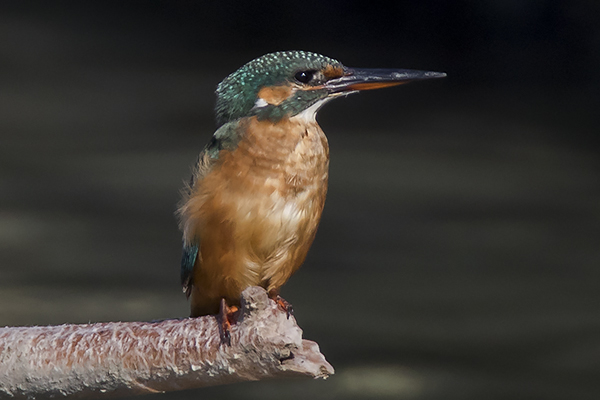
This Kingfisher was photographed at El Pinet where it was perched for a considerable time. Brian would have like a shot of the bird in flight but it stayed where it was.

On 16th September we visited San Pedro Del Pinatar we had good views of both Curlew Sandpiper and Sanderling.


We travelled south and at the Salinas, near La Manga we saw two Caspian Terns. A first for me and Bryan´s second in Spain.

All photographs Copyright Bryan Thomas 2017

This Kingfisher was photographed at El Pinet where it was perched for a considerable time. Brian would have like a shot of the bird in flight but it stayed where it was.
On 16th September we visited San Pedro Del Pinatar we had good views of both Curlew Sandpiper and Sanderling.


We travelled south and at the Salinas, near La Manga we saw two Caspian Terns. A first for me and Bryan´s second in Spain.

All photographs Copyright Bryan Thomas 2017
Stop Corporate Grouse Shooting Days
Stop Corporate Grouse Shooting Days
In light of the government's rejection of an e-petition last October calling for the banning of grouse shooting which was signed by 123,077 people, we have been prompted to adopt a new approach.
We are now calling upon UK companies to treat grouse shooting as a Corporate Social Responsibility (CSR) issue. We know that grouse shooting estates offer tailor made ‘corporate days’ for businesses to shoot grouse on the UK’s moorlands, and given the environmental and animal welfare implications of this pursuit we want businesses to make a stand against it.
As part of this research we are circulating a small – five question – questionnaire to 189 UK companies. So far we've had positive responses.
Turn your back on Grouse is part of the campaign to safe the Hen Harrier. The Raptor Persecution Site provides regular details of
Stone of the persecutin that is taking place. The management of the moors and the evidence of the slaughter that takes place not not only there, but the seemingly random shooting of wildlife seems to be a regular activity for some. However there are people in the world who do care.
In light of the government's rejection of an e-petition last October calling for the banning of grouse shooting which was signed by 123,077 people, we have been prompted to adopt a new approach.
We are now calling upon UK companies to treat grouse shooting as a Corporate Social Responsibility (CSR) issue. We know that grouse shooting estates offer tailor made ‘corporate days’ for businesses to shoot grouse on the UK’s moorlands, and given the environmental and animal welfare implications of this pursuit we want businesses to make a stand against it.
As part of this research we are circulating a small – five question – questionnaire to 189 UK companies. So far we've had positive responses.
Turn your back on Grouse is part of the campaign to safe the Hen Harrier. The Raptor Persecution Site provides regular details of
Stone of the persecutin that is taking place. The management of the moors and the evidence of the slaughter that takes place not not only there, but the seemingly random shooting of wildlife seems to be a regular activity for some. However there are people in the world who do care.
Saturday, 16 September 2017
San Pedro and Salinas La Manga
Following on from yesterday’s hours of birding we looked for information of recent sightings and decided that we would stay on or near the coast.
We arrived at the Salinas of San Pedro del Pinatar at 8.30 ready to check out everything that we could find. On the beach there were two small groups of Sanderlings and there was a good number of Turnstones on the line of seaweed. Small birds were scarce with only three Crested Larks, a Serin, and one Southern Grey Shrike on show. A Northern Wheatear also flew. Yellow Legged Gulls were numerous with only one Audouin’s and a small number of Slender Bills. There was not one Tern to be seen.
We paid attention to all waders hoping to see a Dowitcher and the Broad Billed Sandpiper that have been reported. We spoke with a Spanish birder who had been on site on Monday and he had no sightings either.
The following we did see:
Sanderling
Little Stint
Little Ringed Plovers
Redshank
Curlew Sandpipers
Dunlin
Ruff
There were some noticeable absentees, but a Peregrine Falcon (believed female) flew over from the direction of the hotel toward Lo Pagan. (Collins Bird Guide notes the difference of Iberian birds to U.K. ones). I don’t list the usual, always seen species.
We moved further south (via the motorway) to the La Manga Salinas and leaving MU 312 at junction 13 where we were very lucky for amongst about 150 Y.L. Gulls Bryan spotted two Caspian Terns. They were distant, but we obtained good views through the scope and with a closer look through the camera lens. They are large and beautiful Terns and a first sighting for me and only a second Spanish sighting for Bryan. The heat haze and distance enabled us to have a good record shot of the sightings. Not a ‘pin-sharp’ photo though to satisfy the operator! In the same location were ten Stone Curlews. In an adjacent lagoon we were able to see through the camera lens a group of 10 Kentish Plovers.
This area is not in use, but seems to contain a notable collection of species and is worth further attention. That is more likely to be the case after rain.
As we parked near the end dry lagoon a Common Kestrel flew and a female Common Redstart was seen.
After that we had a very quick look at Caiblanque Regional Park and we decided with the heat of the day and the number of tourists there it was best left for another time.
There is considerable mileage involved in taking this trip and it could be worth while visiting Cabo de Palos as well.
I always try and give locations to where we have seen the species we have viewed. I think it is of no use to anyone to just provide a list and I do realize that some knowledge is required to travel to the sites that we have visited. I will also confirm that what we say we have seen, we have actually seen and some have been viewed through a camera lens. I also put the blog entry on as soon as possible so that individuals can take immediate note of the contents.
We arrived at the Salinas of San Pedro del Pinatar at 8.30 ready to check out everything that we could find. On the beach there were two small groups of Sanderlings and there was a good number of Turnstones on the line of seaweed. Small birds were scarce with only three Crested Larks, a Serin, and one Southern Grey Shrike on show. A Northern Wheatear also flew. Yellow Legged Gulls were numerous with only one Audouin’s and a small number of Slender Bills. There was not one Tern to be seen.
We paid attention to all waders hoping to see a Dowitcher and the Broad Billed Sandpiper that have been reported. We spoke with a Spanish birder who had been on site on Monday and he had no sightings either.
The following we did see:
Sanderling
Little Stint
Little Ringed Plovers
Redshank
Curlew Sandpipers
Dunlin
Ruff
There were some noticeable absentees, but a Peregrine Falcon (believed female) flew over from the direction of the hotel toward Lo Pagan. (Collins Bird Guide notes the difference of Iberian birds to U.K. ones). I don’t list the usual, always seen species.
We moved further south (via the motorway) to the La Manga Salinas and leaving MU 312 at junction 13 where we were very lucky for amongst about 150 Y.L. Gulls Bryan spotted two Caspian Terns. They were distant, but we obtained good views through the scope and with a closer look through the camera lens. They are large and beautiful Terns and a first sighting for me and only a second Spanish sighting for Bryan. The heat haze and distance enabled us to have a good record shot of the sightings. Not a ‘pin-sharp’ photo though to satisfy the operator! In the same location were ten Stone Curlews. In an adjacent lagoon we were able to see through the camera lens a group of 10 Kentish Plovers.
This area is not in use, but seems to contain a notable collection of species and is worth further attention. That is more likely to be the case after rain.
As we parked near the end dry lagoon a Common Kestrel flew and a female Common Redstart was seen.
After that we had a very quick look at Caiblanque Regional Park and we decided with the heat of the day and the number of tourists there it was best left for another time.
There is considerable mileage involved in taking this trip and it could be worth while visiting Cabo de Palos as well.
I always try and give locations to where we have seen the species we have viewed. I think it is of no use to anyone to just provide a list and I do realize that some knowledge is required to travel to the sites that we have visited. I will also confirm that what we say we have seen, we have actually seen and some have been viewed through a camera lens. I also put the blog entry on as soon as possible so that individuals can take immediate note of the contents.
Thursday, 14 September 2017
Quieter Skies
Starting from Gran Alicant again we stopped off at our usual places. We watched Whiskered Terns at the lagoon opposite Las Brisas. At the pulling off spot past the Salt Tower we viewed forty Spoonbill and about thirty Great Crested Grebes. Flamingos were scattered across the water and one Marsh Harrier landed on an island and then flew north.
El Pinet gave us excellent views of a perched male Kingfisher that was photographed by Bryan.
In the water and close by was a Greenshank and one Redshank. There was no sighting of Pratincoles or Curlew Sandpipers and it was quieter than last Saturday. The skies were almost empty with only a few Barn Swallows flying by, two Red Rumped Swallows were also seen and a solitary Swift was seen.
We moved on to San Felipe Neri with the intention of checking out the waders there.
Ringed Plovers
Little Ringed Plover.
Kentish Plover
Common, Green and Wood Sandpipers
Black Tailed Godwits
Little Stint - no sighting of Temminck’s Stint this time
Dunlin
Glossy Ibis - about the same number as last time.
Marbled Ducks - ten
Red Knobbed Coots - un-tagged and swimming free.
Grey Heron
Cattle Egrets in good numbers.
Bee-eaters are still here, but not in previous numbers.
Raptors were very disappointing with one Marsh Harrier and two Common Kestrels seen all morning.
El Pinet gave us excellent views of a perched male Kingfisher that was photographed by Bryan.
In the water and close by was a Greenshank and one Redshank. There was no sighting of Pratincoles or Curlew Sandpipers and it was quieter than last Saturday. The skies were almost empty with only a few Barn Swallows flying by, two Red Rumped Swallows were also seen and a solitary Swift was seen.
We moved on to San Felipe Neri with the intention of checking out the waders there.
Ringed Plovers
Little Ringed Plover.
Kentish Plover
Common, Green and Wood Sandpipers
Black Tailed Godwits
Little Stint - no sighting of Temminck’s Stint this time
Dunlin
Glossy Ibis - about the same number as last time.
Marbled Ducks - ten
Red Knobbed Coots - un-tagged and swimming free.
Grey Heron
Cattle Egrets in good numbers.
Bee-eaters are still here, but not in previous numbers.
Raptors were very disappointing with one Marsh Harrier and two Common Kestrels seen all morning.
Sunday, 10 September 2017
More on the Migration
Having read some of the birding reports I knew that the migration had gathered impetus. So we met again at Gran Alicant, but this time the two became four with Tony from Leigh and Jeanette from North Holland. Clot de Galvany was our first stop and here two White Headed Ducks sat in the middle of the water. Two Common Sandpipers were active and we heard Little Bittern calling, then one showed on the edge of reeds and eventually we saw two fly. A Reed Warbler was in the reeds next to the hide.
We moved on to our usual stops along the N 332 and apart from the usual we were rewarded with a clear view of a juvenile Purple Heron flying over. There was a mass of Gulls on the Salinas and a good number Great Crested Grebes.
At El Pinet there was much more to see. Little Terns were active and a Sandwich Tern flew in the distance. A young Collared Pratincole was on an island. A Kentish and several Little Ringed Plovers were feeding with Dunlin, Little Stints, Black Tailed Godwits, Redshank, two Curlew Sandpipers and the occasional Avocet and Flamingo.
Heading towards San Felipe Neri we were on the look out for Rollers and Bee-eaters. We managed one lone Roller, probably a juvenile, that was perched in a tree. The Bee-eaters put on an exceptional display for us. On the electric cables they were perched in their hundreds. They flew and hawked all around. Some came over the top of us and perched alongside. They are beautiful birds and now they are on their way south. We heard them again at San Felipe and that could be the last that we see or hear of them until early summer.
Apart for an occasional Marsh Harrier any raptors were not easy to find. We had perched Common Kestrels and only one Common Buzzard. However at the far right lagoon at Hondo and as we were watching the waders, a Short-toed Eagle splashed down, stood in the shallow water, and then flew directly over us as we watched from the hide. That was close and all the underside plumage was seen.
Time was now limited and so we made a quick appraisal of the waders. Temmink’s Stint was observed along with a Wood Sandpiper. Dunlin and Little Ringed Plovers were also there. We will return and with adequate time we will see what we can locate. In a group there were seventy Glossy Ibis with twenty to thirty more elsewhere in the water. Our two visitors were keen to see both Marbled Ducks and Red-knobbed Coots. These we found and with no collars on the latter.
The scrapes around the visitor center are overgrown and there are no margins for the waders. That was disappointing and although we took the boardwalk both ways we saw nothing of note except for another juvenile Purple Heron in flight and one flying Squacco Heron and both rounded the day off nicely,
Small birds were in short supply, but Zitting Cisticolas showed frequently.
However the skies were busy with Barn Swallows (mainly), Red-rumps as well and with some House Martins and Common and Pallid Swifts. They were all heading south of course. We also especially wanted to see an Alpine Swift, but maybe next time.
We moved on to our usual stops along the N 332 and apart from the usual we were rewarded with a clear view of a juvenile Purple Heron flying over. There was a mass of Gulls on the Salinas and a good number Great Crested Grebes.
At El Pinet there was much more to see. Little Terns were active and a Sandwich Tern flew in the distance. A young Collared Pratincole was on an island. A Kentish and several Little Ringed Plovers were feeding with Dunlin, Little Stints, Black Tailed Godwits, Redshank, two Curlew Sandpipers and the occasional Avocet and Flamingo.
Heading towards San Felipe Neri we were on the look out for Rollers and Bee-eaters. We managed one lone Roller, probably a juvenile, that was perched in a tree. The Bee-eaters put on an exceptional display for us. On the electric cables they were perched in their hundreds. They flew and hawked all around. Some came over the top of us and perched alongside. They are beautiful birds and now they are on their way south. We heard them again at San Felipe and that could be the last that we see or hear of them until early summer.
Apart for an occasional Marsh Harrier any raptors were not easy to find. We had perched Common Kestrels and only one Common Buzzard. However at the far right lagoon at Hondo and as we were watching the waders, a Short-toed Eagle splashed down, stood in the shallow water, and then flew directly over us as we watched from the hide. That was close and all the underside plumage was seen.
Time was now limited and so we made a quick appraisal of the waders. Temmink’s Stint was observed along with a Wood Sandpiper. Dunlin and Little Ringed Plovers were also there. We will return and with adequate time we will see what we can locate. In a group there were seventy Glossy Ibis with twenty to thirty more elsewhere in the water. Our two visitors were keen to see both Marbled Ducks and Red-knobbed Coots. These we found and with no collars on the latter.
The scrapes around the visitor center are overgrown and there are no margins for the waders. That was disappointing and although we took the boardwalk both ways we saw nothing of note except for another juvenile Purple Heron in flight and one flying Squacco Heron and both rounded the day off nicely,
Small birds were in short supply, but Zitting Cisticolas showed frequently.
However the skies were busy with Barn Swallows (mainly), Red-rumps as well and with some House Martins and Common and Pallid Swifts. They were all heading south of course. We also especially wanted to see an Alpine Swift, but maybe next time.
Subscribe to:
Posts (Atom)